The foundation of our work
The Body Mind Brain Connection
Your brain, your body and your mind are not three separate systems. They are one system in constant dialogue — and the quality of that dialogue decides how you think, feel, act and perform.
When it breaks down, you feel it as anxiety, fatigue or low mood. When it is restored, focus, energy and drive come back.
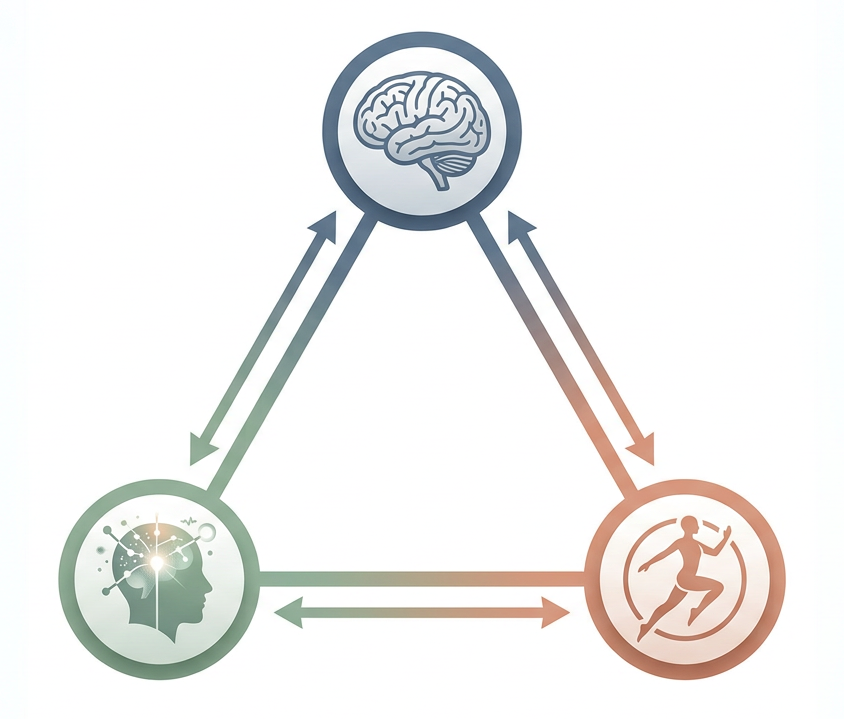
Three conversations
How the connection works
Every arrow in the diagram is a real, two-way pathway. Under long-term pressure, each one can start carrying the wrong message.
Body ↔ Brain
Your gut, hormones, immune system and blood sugar constantly signal your brain — through the vagus nerve, the stress axis and inflammatory messengers. When the body is inflamed, depleted or stuck in stress mode, the brain receives a steady message of threat.
- The gut–brain axis
- Cortisol and the stress axis
- Inflammation and brain chemistry
Brain ↔ Mind
The circuits you use most become the circuits that run you. Months of vigilance, worry or overload wire the brain towards more of the same. Neuroplasticity works in both directions — which is why targeted brain-based training can rewire it back.
- Neuroplasticity
- Attention, focus and mental stamina
- Mood and motivation circuits
Mind ↔ Body
Your breath, posture and muscle tone change with every thought — and change your thoughts in return. A tight body and shallow breath tell the brain the danger has not passed, even when it has.
- Breath and heart-rate rhythm
- Posture, tension and the nervous system
- Somatic practice to reset your default
When the conversation breaks down
Three ways it shows up
Anxiety
The alarm system is stuck on. Stress chemistry, shallow breathing and an over-vigilant brain keep signalling danger that is no longer there.
The Anxiety ClinicFatigue
The energy system is running on fumes. Poor sleep, blood-sugar swings, inflammation and an overloaded brain drain mental stamina by early afternoon.
The Fatigue & Sleep ClinicLow mood
The drive system has gone quiet. Inflammation, nutrient and hormone shortfalls and under-used motivation circuits flatten mood and interest.
The Depression ClinicRestoring the connection
Assessment first. Then rebuild. Then make it last.
Guessing is expensive, so we start by measuring. Then each discipline repairs a different part of the conversation.
Functional Medicine
Finds the physical drivers underneath how you feel. We look at labs in a deeper, more analytical way than a standard screen and correlate them with your symptoms — the gut, hormones, blood sugar, inflammation and nutrient status that shape brain chemistry.
- Staged lab testing, baseline to advanced
- Gut, hormone and stress-axis profiling
- Nutritional and herbal protocols
Functional Neurology
Measures how your brain is actually performing, then trains it. Targeted sensory and physical exercises use the brain's capacity to change — neuroplasticity — to rebuild focus, stamina, calm and drive.
- Brain performance analysis
- Neurological examination (in clinic)
- Personalised brain-based exercises
Lifestyle Medicine
Makes the gains last. Sleep, stress load, movement, breath and daily rhythm are where the body mind brain connection is either restored or worn down — every day. We build habits that fit a full workload.
- Sleep and circadian reset
- Breath, yoga and qigong practices
- Ten-minute desk resets for the working day